
Does Philadelphia Publish Mugshots
The answer for the public PDP locator is no. The official Philadelphia Incarcerated Person Locator does not publish mugshots in the app code reviewed for the research. No booking-photo element, image URL, mugshot gallery, recent-bookings feed, or public photo angle was found. The visible result inventory is limited to name, PID, facility assignment, and last-updated timestamp. That makes Philadelphia County jail mugshots different from counties that publish full inmate profiles with photos.
The Philadelphia Department of Prisons is the local jail operator. The sheriff does not run the jail roster, and the PDP locator should not be described as a sheriff mugshot site. It is best used to confirm current custody and facility. For charges, use court dockets. For a booking photo that is not online, use the City of Philadelphia open-records process, understanding that Pennsylvania Right-to-Know Law exemptions and CHRIA may affect release.
What is and isn't public: The PDP locator publicly shows custody-location data. It does not show public mugshots, charges, bail, court dates, housing pod, arresting agency, or a full booking profile.
What PDP Shows Instead
When people search for Philadelphia County jail mugshots, they often need a different record first. The PDP locator can identify the person by name and PID, then show where the person is held. That is the information needed to call Classification, check visitation rules, or file a more specific records request. Without the PID, exact name, date of birth, arrest date, and facility, a booking-photo request is harder to route.
| Field | Public PDP Locator Result |
|---|---|
| Booking photo / mugshot | Not published in the public locator. |
| Name | Proper-cased first and last name for the matching result. |
| PID / PPN | Police identification number or person-number style identifier. |
| Facility code | CFCF, DC, PICC, RCF, ASDCU, OJ, or another app code. |
| Facility name | Official facility name when the app maps the code. |
| Last updated | Timestamp for the data in the result. |
| No record found | No public match for the PID or full name and date-of-birth search. |
The official locator source shows why Philadelphia County booking photos should not be promised from the public roster.
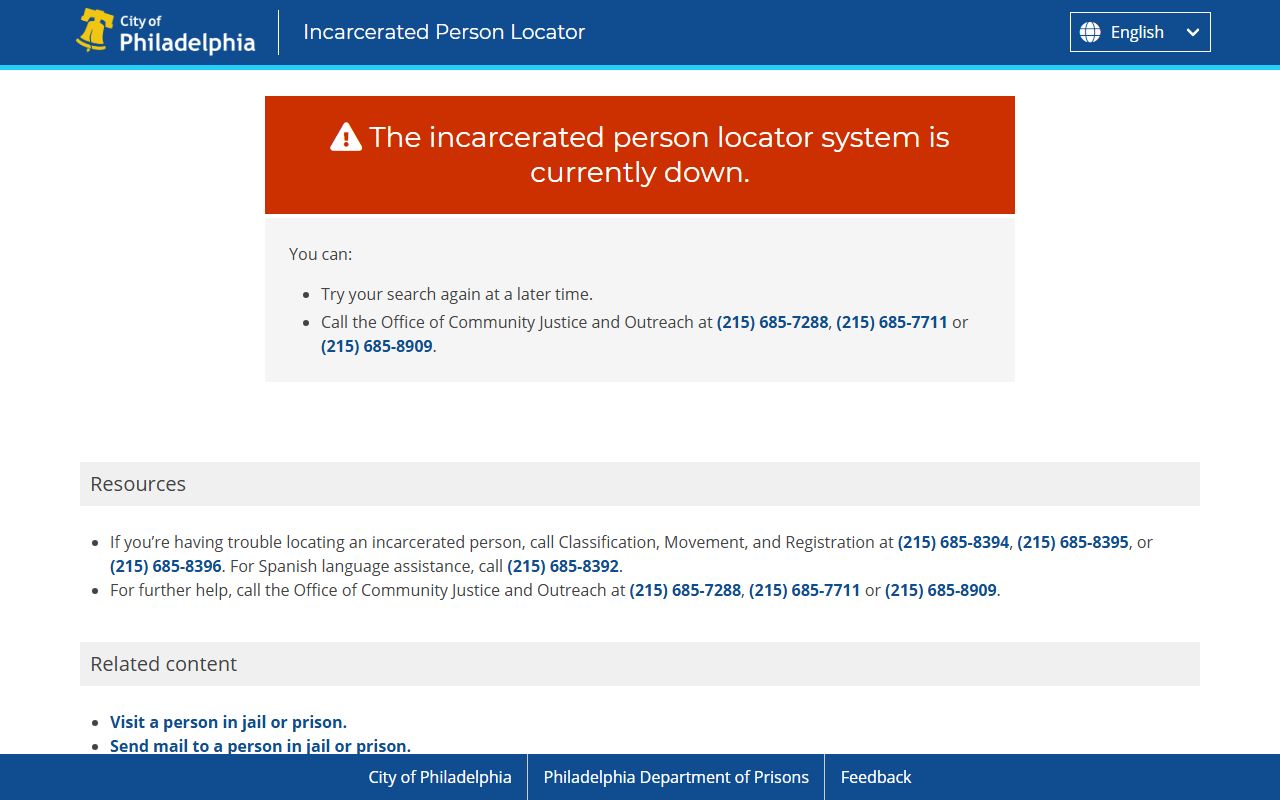
The image supports the page's core point: the locator searches by PID or full name and date of birth, but it is not a mugshot display page.
Request Philadelphia Booking Photos
A booking photo may be requested as a record, but a request is not the same as a right to public release. The City of Philadelphia's open-records policy requires a formal written request on the statewide Right-to-Know form. The request should be specific enough for the Open Records Officer to identify the record. A vague request for all mugshots is less useful than a named record request tied to a person, date, and incident.
- Confirm custody or recent custody through the PDP locator or Classification, Movement, and Registration.
- Search UJS Case Search for the related docket so the request can identify the arrest and court matter.
- Use the City of Philadelphia Open Records Policy route and the statewide RTKL request form.
- Describe the requested record as a booking photograph or booking record and include name, PID if known, date of birth if appropriate, arrest date, facility, and docket or incident identifiers.
- Watch for the City's initial five-business-day response period or a lawful extension of up to 30 calendar days.
- If denied, review the response because criminal investigative records and some criminal-history information may have different appeal or access rules.
The City open-records source is the correct route for formal Philadelphia booking-photo requests that are not available online.
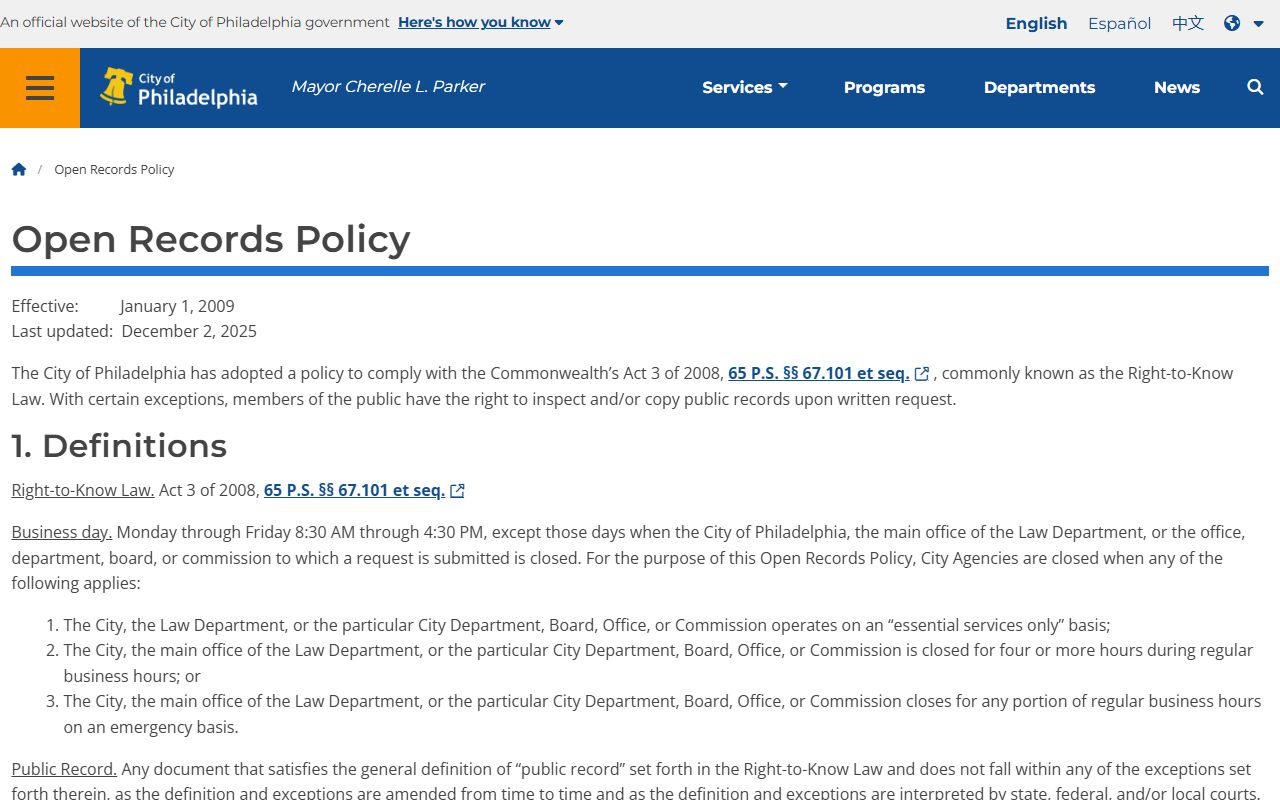
The open-records process is important because Philadelphia does not offer a public jail mugshot gallery to browse.
Philadelphia Mugshot Access Law
Pennsylvania does not have a simple rule that every booking photo must be posted online. The Pennsylvania Right-to-Know Law starts with a public-records framework and a presumption of access for agency records, but exceptions apply. RTKL Section 708 can affect investigative, security, personal-identification, and correctional records. The Criminal History Record Information Act, often called CHRIA, governs criminal history record information and is relevant to booking-photo and criminal-record requests.
Key Statutes:
Pennsylvania Right-to-Know Law, 65 P.S. §§ 67.101-3104 sets the state public-records framework, subject to exemptions.
Pennsylvania CHRIA, 18 Pa.C.S. Chapter 91 affects dissemination of criminal-history record information.
Title 42 Judicial Code supplies court, sentencing, sealing, and expungement context after the criminal case moves through court.
The safe Philadelphia wording is narrow: a booking photo may be requested as a record, but PDP does not publish jail mugshots in the public locator, and release depends on RTKL, CHRIA, agency record determinations, and any court or investigative limits that apply to the case.
A denial should be read closely. The agency response may cite an investigative-record exemption, a criminal-history limitation, a security concern, an identity-protection issue, or a lack of responsive records. Some appeals go through the Pennsylvania Office of Open Records, while criminal investigative records can follow different appeal routing. The response letter, not the search result screen, controls the next step.
Court Dockets Not Galleries
UJS Case Search is useful after an arrest, but it is not a mugshot gallery. It shows docket-sheet information such as court events, charges, docket numbers, dispositions, and cross-court docket links. It is the correct place to check formal charge records after a Philadelphia jail arrest. It should not be described as a place to view Philadelphia County booking photos.
This distinction prevents a common error. A person may be in PDP custody, appear in UJS, and still have no public booking photo online. The PDP locator answers where the person is held. UJS answers what case exists. The open-records process handles non-online agency records. Those three paths should not be merged into a single mugshot claim.
| Record Channel | Shows | Does Not Show |
|---|---|---|
| PDP locator | Name, PID, facility, last-updated time. | Mugshots, charges, bail, court events. |
| UJS Case Search | Dockets, charges, events, dispositions, cross-court numbers. | Jail booking photos. |
| City RTKL request | Potential non-online agency records if releasable. | Guaranteed access to exempt or restricted records. |
Public Not Public Records
Public access depends on record type. A facility assignment is public in the PDP locator when a match is found. A docket may be public in UJS unless it is juvenile, limited-access, expunged, sealed, too new to display, or otherwise restricted. A booking photo is not posted by the PDP locator and must be requested if needed. The agency may grant, deny, partially grant, or redact the requested material.
- Public custody pointer
- Name, PID, facility, and last-updated time from the PDP locator.
- Public court docket
- Charges and events that appear through UJS when not restricted.
- Requested jail record
- Booking photo or booking record sought through RTKL and reviewed by the agency.
- Restricted record
- Juvenile, sealed, expunged, investigative, security-sensitive, or CHRIA-limited material.
For current custody instructions and facility context, use Philadelphia County inmate records. For charge outcomes, sealing, and expungement context, use Philadelphia County court records after arrest.
Federal ICE Mugshot Limits
Federal custody is separate from Philadelphia County jail custody. The BOP Inmate Locator can be used for federal prisoners or historical BOP custody, but BOP profiles do not publish federal mugshots. Federal pretrial custody may involve the U.S. Marshals Service, and FDC Philadelphia at 700 Arch Street is a BOP detention facility, but those records are not searched through the PDP locator.
Immigration custody is also separate. The ICE Online Detainee Locator can locate a person currently held by ICE using A-number and country of birth or biographical data, but it does not publish detainee mugshots. No dedicated ICE detention facility in Philadelphia County was confirmed in the official source set. Do not infer that an immigration hold means the person is in a PDP facility unless a custody or court record says so.
Mugshot Removal Caveats
Because the public PDP locator does not publish mugshots, removal from that locator is not the main Philadelphia issue. If a booking photo is obtained or republished elsewhere, the official route depends on the court case and record status. A dismissal, nolle prosequi, acquittal, sealing order, limited-access order, or expungement may affect what should remain public, but the effect depends on Pennsylvania law and the court order.
Do not use commercial mugshot-publishing or pay-to-remove sites as a records source. The reliable route is to use the court-clearing process where eligible, obtain the order, and then contact the originating agency or publisher with that order. Philadelphia's research did not locate a PDP public mugshot-removal workflow because no PDP public mugshot gallery was found.
A court order may not erase every copy at once. It can change what the court, police, jail, or other agency should release, but outside publishers may need direct notice and proof. Keep the request factual: identify the case, attach the order, and ask the holder to update or remove the photo based on the official record status. Avoid paying a site that is not the record owner.
If the only source is a public search result, save the docket number and agency response instead of relying on a copied image. Official paperwork is what supports a later correction request.